Integrated Care Delivery
Behavioral Health Warm-Handoff Integration Playbook
Primary Care Behavioral Health (PCBH) eliminates referral drop-off by transitioning patients directly from a positive SBIRT screen to an on-site clinician within ten minutes.
Evidence basis: Mid-Shore Behavioral Health Warm Handoff Guide and CHCF Self-Management Integration Report.
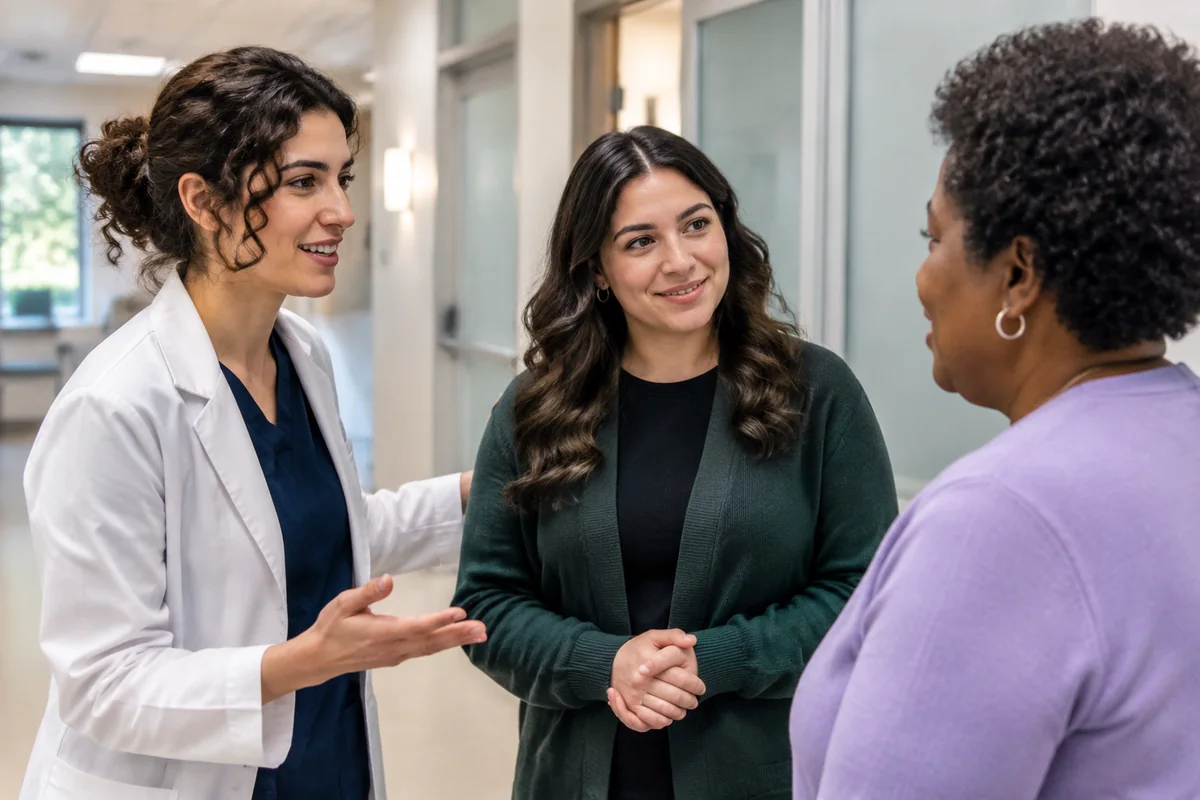
1. Four-Step Exam-Room Warm-Handoff Protocol
-
Step 1 · Morning Pre-Visit Huddle
Flag Scheduled High-Risk Panels
Medical assistants and behavioral health educators review the day's schedule for patients due for annual SBIRT, recent ED alcohol/opioid visits, or uncontrolled hypertension and diabetes.
-
Step 2 · Instant Team Ping
Signal Availability Before Leaving the Exam Room
During the brief intervention, the resident pings the PCBH clinician via EHR instant chat or hallway flag so the specialist arrives immediately as the medical wrap-up finishes.
-
Step 3 · 60-Second Three-Way Introduction
Transfer Trust With Normalizing Language
Use concise, stigma-free framing: "This is Alex, our clinic behavioral health partner who works with me on sleep, stress, and cutting back on drinking. I have shared your goals, and Alex has 15 minutes right now to map out options with you."
-
Step 4 · Same-Day 15-Minute Functional Consult
Deliver Actionable Next Step & Shared Note
The behavioral clinician completes a targeted functional assessment, confirms follow-up within 7 to 14 days (or bridges to specialty residential/MAT services), and routes a concise care summary back to the resident.
2. Warm Handoff vs. Traditional External Referral
| Workflow Metric | Paper / Portal External Referral | Same-Day Clinic Warm Handoff |
|---|---|---|
| First behavioral contact timing | 14 to 45 days wait at separate site | <= 10 min same-day in exam room |
| Completed first visit rate | 25% to 40% typical retention | > 80% immediate engagement |
| Patient stigma barrier | High (separate intake forms & building) | Low (embedded primary care team partner) |
| Resident learning loop | Delayed or absent external fax summary | Same-day shared EHR note & hallway debrief |
3. Clinic Warm-Handoff Readiness Audit
5-Pillar PCBH Clinic Readiness Checklist
Same-Day PCBH Ready4. Warm-Handoff Questions
Why does a same-day warm handoff outperform traditional paper referrals?
Paper or portal referrals to off-site behavioral clinics frequently lose 60% to 75% of patients before first appointment. A face-to-face warm handoff inside the exam room leverages existing physician trust and yields over 80% same-day intake completion.
How should a family medicine resident introduce the behavioral health clinician?
Frame the behavioral clinician as a routine member of the medical team helping with stress, sleep, or health habits rather than a separate mental health stigma escalation.
Historical Citation Context: CHCF & CCSME Behavioral Health Homes Integration Booklet
Legacy Cited Path: /uploads/media/wiphl_booklet_finalNEW.pdf
Preserved for scholarly citation continuity from California Health Care Foundation ("Helping Patients Help Themselves," Ref. 78) and CCSME / SAMHSA-HRSA CIHS Behavioral Health Homes documentation citing "Help Change Lives for a Healthier Wisconsin" (wiphl_booklet_finalNEW.pdf). This page carries forward WIPHL's on-site health educator warm-handoff workflow integrated into modern Primary Care Behavioral Health clinics.